Understanding basketball positions is the key to seeing the game from a different perspective and appreciating every play.
Anúncios
More than just numbers on a jersey, each position represents a unique set of skills, responsibilities, and a vital role within the team’s tactical system.
If you’re passionate about the sport, whether you’re an amateur player looking for your place on the court or a fan eager to deepen your tactical knowledge, this article is for you.
We invite you to dive into the world of the five basketball positions, uncovering what makes each one special and celebrating the athletes who became legends.

Roles and Skills of Basketball Positions
Understanding the role of each athlete is the first step to analyzing the game in a smart and in depth way. The five traditional basketball positions form the backbone of any team, with each player playing a crucial role on both offense and defense.
The harmony between these roles defines collective success, turning five individual talents into a cohesive and winning unit.
Point Guard (PG)
The brain of the team, responsible for organizing offensive plays and setting the pace of the game. This role demands exceptional court vision, sharp ball handling, and great passing ability.
Shooting Guard (SG)
The team’s main perimeter scorer, specializing in mid and long range shots. Needs agility to escape defenders and a quick, consistent shooting form.
Small Forward (SF)
Considered the most versatile player, combining strength, agility, and skill to score in multiple ways. Responsibilities include scoring, grabbing rebounds, and guarding the opponent’s top players.
Power Forward (PF)
Plays closer to the basket, using strength to fight for rebounds and score in the paint. Modern power forwards have also developed reliable mid range shooting to stretch defenses.
Center (C)
The defensive anchor and main presence in the paint, usually the tallest and strongest player on the team. Key duties include protecting the rim, blocking shots, and securing both offensive and defensive rebounds.
How to Choose Your Basketball Position? Tips for Players
Choosing among basketball positions starts with self awareness and honest feedback from coaches who have seen you in different situations.
Consider your height, wingspan, mobility, coordination, and comfort with the ball under pressure. Then, match your most reliable strengths to a role that helps the team win today while still giving you room to grow into new responsibilities.
- Assess natural tendencies such as vision, touch, and finishing
- Track measurements including height, wingspan, speed, and vertical leap
- Note where you feel calm late in games ball handling or off ball
- Ask coaches for objective film review and specific drills
- Value versatility yet commit to mastering one or two core duties
- Play to team needs while building a long term development plan
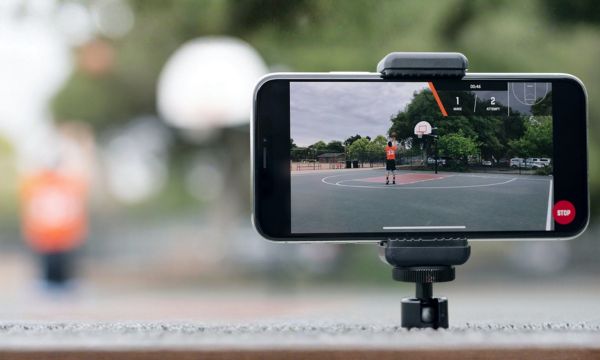
Gold Tip: Record three games, tag your best ten plays by role, and review patterns with a coach to align your basketball position with evidence.
Greatest Players of All Time in Each Position
Lists of legends vary by era and criteria, yet certain names consistently appear because of championships, awards, and transformative impact. For example, widely recognized point guards changed pace and spacing, while iconic centers reshaped the paint with size, skill, and stamina.
- Point Guard: Magic Johnson, Stephen Curry, Oscar Robertson, Isiah Thomas and John Stockton
- Shooting Guard: Michael Jordan, Kobe Bryant, Dwyane Wade, Jerry West and Allen Iverson
- Small Forward: LeBron James, Larry Bird, John Havlicek, Kevin Durant and Julius Erving
- Power Forward: Tim Duncan, Karl Malone, Dirk Nowitzki, Kevin Garnett and Giannis Antetokounmpo
- Center: Kareem Abdul-Jabbar, Wilt Chamberlain, Bill Russell, Shaquille O’Neal and Hakeem Olajuwon
Great teams thrive when each role is respected, practiced, and performed with purpose.

Great-basketball-players-(Source-Google)
Evolution and Hybrid Positions in Modern Basketball
Basketball is a sport in constant transformation, and perhaps the biggest change in recent decades has been the flexibilization of traditional positions.
The modern game, faster and more focused on court spacing, has given rise to a new type of athlete: the hybrid player, capable of performing multiple roles efficiently. The rigidity of the past, where each player had a strictly defined role, has been replaced by the value placed on versatility and tactical adaptability.
This evolution doesn’t diminish the importance of understanding the classic basketball positions, on the contrary, it requires an even deeper knowledge to fully appreciate the new nuances.
Today, we see players combining the vision of a point guard with the strength of a power forward, or the shooting ability of a shooting guard with the height of a center.
This fluidity has made the game more dynamic and unpredictable. Understanding basketball positions now also means appreciating how these new skill combinations impact strategies and the final outcome of a game.
How Basketball Positions Influence Strategy
Strategy weaves roles into coordinated actions that create high quality shots and sturdy defense. Offensively, teams combine screening angles, spacing, and pace to produce mismatches, paint touches, and rhythm threes.
Defensively, communication and coverage rules align each position so that help arrives on time without leaving easy opportunities elsewhere across basketball positions.
- Pick and roll pairings match ball handlers with screeners who fit the read
- Five out spacing stretches defenses and opens lanes for drives and cuts
- Early offense rewards rebounders who outlet quickly to pushing guards
- Switch heavy schemes demand wings and bigs who move laterally and communicate
- Rebounding by committee turns every position into a possession saver
Important Tip: Build a playbook of ten actions that cover late game, zone looks, and after timeout specials, then rehearse them at game speed.
Conclusion
Exploring the world of basketball positions means diving into the soul of the sport, understanding that each player has a fundamental role in building a play and striving for victory.
From the intelligence of the Point Guard to the strength of the Center, the harmony among the five positions is what makes basketball a spectacle of strategy, skill, and teamwork. We hope this article has enriched your view of the game, whether you’re a developing athlete or a passionate fan.
Now, when you watch a game, you’ll have a sharper eye for tactics, individual talents, and the collective beauty of the sport. Knowledge of basketball positions is the key to a deeper and more complete appreciation of every dribble, pass, and shot.
Keep learning and, above all, keep enjoying the magic of basketball.