Explore Roland Garros, tennis’s most challenging tournament and learn about its history, clay court demands, memorable matches, and unique French traditions.
Anúncios
When tennis enthusiasts think of the sport’s ultimate challenges, Roland Garros immediately comes to mind.
Known officially as the French Open, this prestigious tournament transforms the tennis world each spring, bringing players to face the unique demands of clay court tennis.
Furthermore, the tournament’s rich history and distinctive atmosphere create an unparalleled sporting spectacle that tests not only athletic ability but also mental fortitude and strategic adaptation.

Roland Garros Origins: From National Tournament to Grand Slam
The tournament’s journey began in 1891 as a modest French national championship, exclusively for French club members. Initially, the competition took place at various venues throughout France, gradually gaining recognition within European tennis circles.
However, the transformation into an international event occurred in 1925, when organizers opened the doors to players from around the world.
Moreover, the tournament earned its distinctive name in honor of Roland Garros, a pioneering French aviator who made significant contributions to early aviation. His legacy became intertwined with tennis excellence when the venue adopted his name in 1928.
Consequently, the French Open evolved from a regional competition into one of tennis’s four Grand Slam tournaments, establishing its permanent home in the 16th arrondissement of Paris.
Throughout the decades, Roland Garros has maintained its unique clay court tradition, distinguishing itself from other Grand Slam events. The tournament’s commitment to this distinctive playing surface has created a specialized championship that demands particular skills and strategies from competitors.
Additionally, recent developments have seen the tournament increase its prize money to a record $63.7 million, reflecting its growing prestige and importance in professional tennis.
Discover the Stade Roland Garros Complex
The Stade Roland Garros complex spans approximately 8.5 hectares in western Paris, featuring multiple courts that showcase the tournament’s architectural evolution.
At the heart of the venue stands Court Philippe-Chatrier, the main stadium with a capacity of 15,000 spectators, which underwent major renovations including a retractable roof completed in 2020. Furthermore, the complex includes Court Suzanne-Lenglen, Court Simonne-Mathieu, and numerous practice courts, each designed to maintain the authentic clay court experience.
Additionally, the venue incorporates modern amenities while preserving its traditional French charm. The complex features multiple restaurants, shops, and exhibition spaces that celebrate tennis history and French culture.
Moreover, recent technological innovations have enhanced the fan experience, with AI-powered features including personalized commentary and virtual stadium creation becoming integral parts of the Roland Garros experience.
The grounds also house the French Tennis Museum, which displays artifacts and memorabilia spanning the sport’s rich history. Visitors can explore interactive exhibits that showcase legendary matches and champion achievements throughout the tournament’s evolution.
Consequently, the Stade Roland Garros complex serves not only as a competitive venue but also as a comprehensive celebration of tennis heritage and innovation.
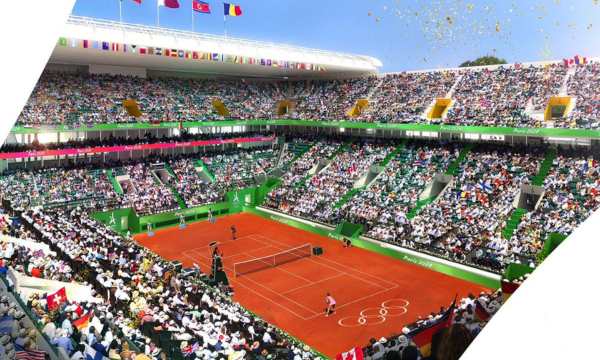
Roland-Garros-court-at-the-2024-Olympics-(Source-Google)
Why Does the French Tournament Test Athletes’ Limits?
Clay court tennis presents unique physical and mental challenges that distinguish Roland Garros from all other Grand Slam tournaments.
The distinctive red clay surface, composed of crushed brick and stone, creates slower ball speeds and higher bounces that extend rally lengths significantly. Furthermore, players must demonstrate exceptional endurance and patience, as matches often stretch beyond four hours due to the surface’s characteristics.
“Clay courts require players to slide into shots and maintain balance while moving, demanding superior leg strength and cardiovascular fitness compared to other surfaces.”
Moreover, the unpredictable nature of clay courts adds another layer of complexity to every match. The surface can become slippery when dry or heavy after rain, forcing players to constantly adapt their movement patterns and shot selection throughout matches.
Additionally, the tournament’s scheduling during spring weather often introduces wind and temperature variations that further challenge players’ tactical approaches and mental resilience.
How Players Change Their Style for Clay Courts
Successful clay court players must master the art of strategic patience and point construction, abandoning the aggressive baseline tactics that work on faster surfaces.
The slower pace allows defenders more time to retrieve seemingly impossible shots, transforming matches into tactical battles of attrition. Furthermore, players often develop specialized techniques such as the heavy topspin forehand, which becomes particularly effective on clay’s high-bouncing surface.
Additionally, movement mechanics undergo significant transformation for clay court success. Players learn to slide into shots rather than stopping and starting abruptly, preserving energy while maintaining court positioning.
The sliding technique also enables players to reach wider balls and recover more efficiently, becoming essential for competitive success on this demanding surface.
The Most Memorable Matches in Roland Garros History
Roland Garros has witnessed countless epic encounters that have defined tennis history and showcased the sport’s dramatic potential.
The 1984 men’s final between John McEnroe and Ivan Lendl stands as a testament to clay court drama, featuring a remarkable comeback that shifted momentum in unforgettable fashion. Moreover, the 2001 match between Gustavo Kuerten and Michael Russell demonstrated the tournament’s capacity for producing unexpected heroes and emotional storylines.
Furthermore, women’s tennis has produced equally compelling narratives at Roland Garros, with matches like the 1999 final between Steffi Graf and Martina Hingis showcasing tactical brilliance and competitive intensity.
Recent years have continued this tradition, with breakthrough performances like Loïs Boisson’s remarkable semi-final run, transforming her from a crowdfunded player to earning 690,000 euros in prize money, exemplifying the tournament’s ability to change careers overnight.
Rafael Nadal’s Dominance at Roland Garros
Rafael Nadal’s supremacy at Roland Garros represents one of sports’ most dominant achievements, with the Spanish champion claiming an unprecedented number of titles on the Parisian clay.
His mastery of clay court tennis has redefined what’s possible on this surface, combining physical prowess with tactical intelligence to create an nearly unbeatable formula. Additionally, Nadal’s playing style perfectly complements the demands of clay courts, featuring heavy topspin, exceptional court coverage, and unmatched competitive intensity.
Moreover, Nadal’s psychological impact on Roland Garros extends beyond his remarkable win-loss record, as opponents often feel the weight of his clay court reputation before matches begin.
His preparation rituals, strategic approach, and never-surrender mentality have become synonymous with Roland Garros excellence. Consequently, Nadal’s legacy has elevated the tournament’s prestige while inspiring a generation of players to embrace clay court tennis with renewed dedication and respect.
The statistics surrounding Nadal’s Roland Garros achievements tell a story of unprecedented dominance that may never be replicated in professional tennis.
His understanding of clay court nuances, combined with physical attributes perfectly suited to the surface, created a combination that proved nearly impossible for competitors to overcome.
Furthermore, his matches at Roland Garros have provided some of tennis’s most memorable moments, cementing his status as the undisputed “King of Clay”.
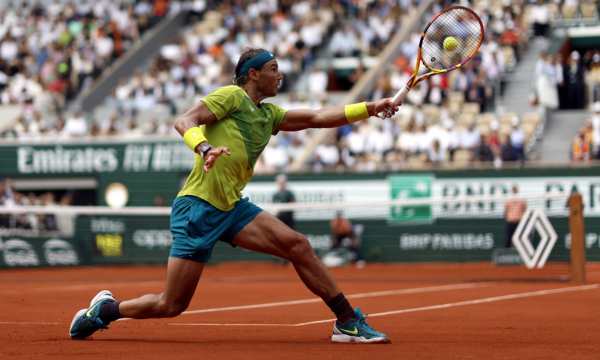
Nadal-in-a-match-at-Roland-Garros-(Source-Google)
French Traditions: The Tournament’s Unique Rituals
Roland Garros maintains distinctive French traditions that set it apart from other Grand Slam tournaments, creating an atmosphere that celebrates both tennis excellence and cultural heritage.
The tournament’s commitment to French language announcements, traditional ceremony protocols, and culinary experiences reflects the nation’s pride in hosting this prestigious event.
Moreover, the venue’s integration with Parisian culture extends beyond tennis, incorporating art exhibitions, wine tastings, and fashion showcases that appeal to diverse audiences.
The tournament’s dedication to sustainable practices and environmental consciousness also reflects contemporary French values while honoring traditional stewardship principles.
Roland Garros continues to evolve its approaches to waste management, energy efficiency, and community engagement, demonstrating how major sporting events can embrace responsibility while maintaining excellence.
Consequently, these efforts ensure that future generations will experience the same magical atmosphere that has defined Roland Garros for over a century.